

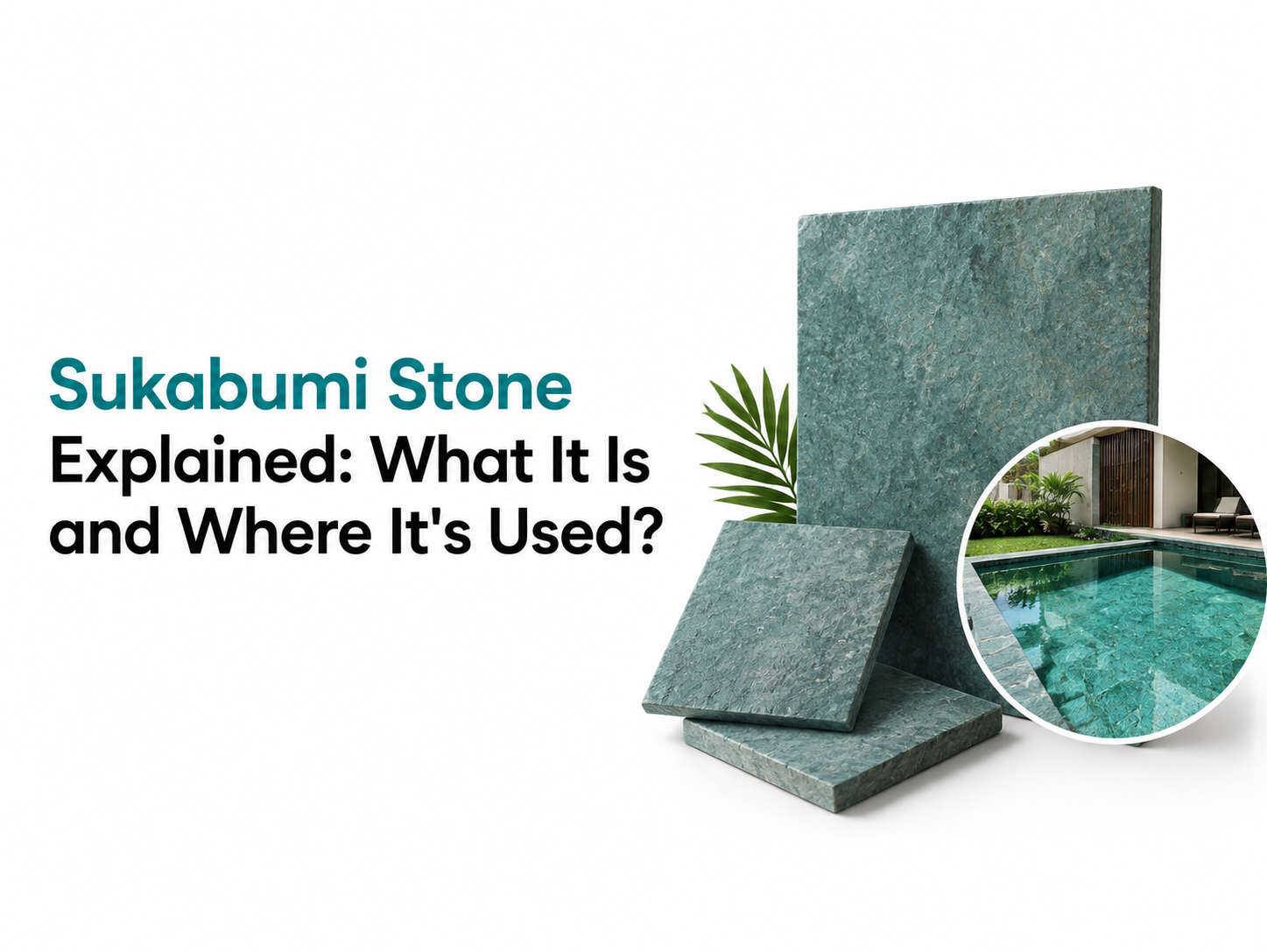
Sukabumi stone has a way of catching your attention, especially when you see it underwater. Its green-to-turquoise tones can give a swimming pool that calm, resort-inspired look many projects aim for. But choosing it only because it looks beautiful can be a mistake. Because it's natural stone, colour, texture, mineral patterns, and surface character can vary from piece to piece. It also needs the right installation plan for the setting.
Once you understand these details, Sukabumi stone becomes much easier to specify. From pools and spas to landscaping and water features, it offers far more design flexibility than you might expect.
This is natural stone with greenish-to-turquoise hues and a natural surface. Yet unlike a man-made surface, it never looks the same in each piece of stone.
You can observe variation in terms of the green hue, texture pattern, minerals and other natural characteristics. They give the final surface its unique texture and make the stone special.
It is also worth noting that Sukabumi stone can look different depending on the environment it is in. Thus, the stone can have different appearances under different conditions—underwater, dry and in different lighting conditions. It is necessary to view representative samples of the stone in both wet and dry conditions.
Pools can be considered the application that is most often related to Sukabumi stone. Once placed in water, the stone can interact with lighting and water movement to make the whole space feel vibrant yet natural.
Sukabumi stone can perfectly blend with timber, tropical plants, neutral masonry and paving. Thus, the stone can fit both contemporary outdoor spaces and more organic designs.
When choosing the stone, it is useful to contact a Sukabumi Stone Exporter in India to discuss the stone, available formats and specifications before finalising the material.
Although pools are the application most commonly associated with Sukabumi stone, the stone has other uses. For example, Sukabumi stone can be used for spas and hydrotherapy areas.
Water fountains, waterfall walls, steps and other water features are also suitable applications. In landscaping, Sukabumi stone fits garden walls, pond edges, cladding and more.
Selected bathrooms and other wet areas can be covered with the stone too. Yet it is necessary to check that the substrate, sealing, waterproofing and maintenance plan are suitable for the application.
It is necessary to choose the correct format based on the area where Sukabumi stone will be installed. Mosaics fit pool curves, steps, borders and detailed arrangements. Tiles can be used in the interior of pools, walls and waterline bands.
Split-face finishes fit feature walls, while smoother finishes suit some architectural applications.
If other natural stones are being considered for the project, it can also be helpful to explore options from a Marble Manufacturer in India, particularly when you need a wider range of stones for architecture and landscaping.
Sukabumi stone should be considered as part of the whole project system. The substrate, adhesives, grout, sealants, drainage and waterproofing should be reviewed before the installation of the stone.
It is also important to check whether the stone requires sealing. Additionally, it is necessary to test the effect of the selected sealer on the colour and appearance of the stone.
Sukabumi stone unites natural variation with a unique greenish-to-turquoise colour. With proper specification and installation, the stone can bring character to pools, spas, water features, landscaping and other wet areas.
Melange Stone offers Sukabumi stone together with natural stone products for architecture and landscaping.